
Introduction
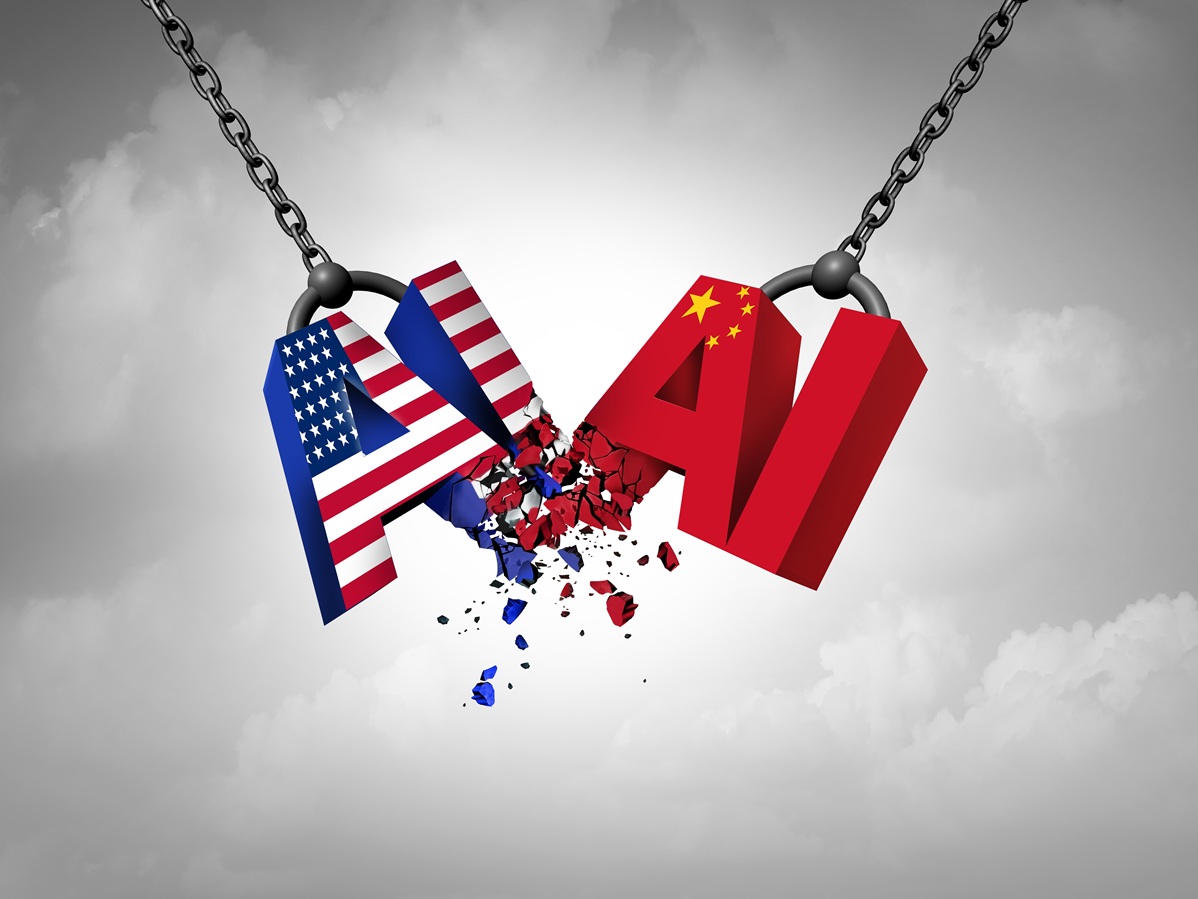
You probably use artificial intelligence without thinking about it. Search engines predict your intent. Apps recommend what you watch next. Even customer support talks back to you now. Behind all of this sits a much bigger struggle: US-China competition for AI markets.
This competition isn’t about one product or one company. It’s about who controls the systems that power modern life. AI decides how data moves, how decisions are made, and how economies scale. The country that leads AI doesn’t just build smarter software. It shapes rules, standards, and future growth.
For years, this rivalry stayed in policy papers and research labs. That’s no longer the case. Governments now intervene directly. Tech firms feel pressure. Global markets feel pulled in different directions.
In this article, you’ll get a clear, grounded look at the US-China competition for AI markets. You’ll see how it started, how it works today, and what it means for businesses, workers, and everyday users like you.
What the US-China Competition for AI Markets Really Is
At a basic level, this is a race for influence.
AI markets include everything built on intelligent systems. That means software, hardware, data, and infrastructure. It also means services that rely on automation and prediction.
Key areas include:
- Cloud computing platforms
- Advanced semiconductors
- Autonomous vehicles
- Financial AI systems
- Medical diagnostics
- Surveillance and security tools
The US-China competition for AI markets is about who dominates these layers together, not separately.
Why AI Became a Strategic Priority
AI as Economic Power
AI boosts productivity. It reduces costs. It scales businesses faster than human labor alone.
Countries that lead AI tend to:
- Grow industries faster
- Attract investment
- Control digital supply chains
This makes AI a growth engine, not just a technology trend.
AI as Political Influence
AI standards spread globally. When a system becomes common, others adapt to it. That creates soft power.
This is why governments now treat AI like infrastructure.
How the United States Entered the AI Race
The US didn’t plan an AI strategy early. It evolved into one.
Private Sector Leadership
Most American AI progress came from private companies. Universities produced research. Startups turned ideas into tools.
This environment rewarded experimentation.
Strengths of the US Model
- Open research culture
- Strong venture capital networks
- Global talent attraction
- Trusted global brands
These factors helped the US lead early AI development.
How China Approached AI Differently
China treated AI as a national project.
Central Planning and Coordination
Government plans aligned companies, funding, and education. Goals were long-term and measurable.
This reduced duplication and sped up execution.
Scale as a Strategy
China leveraged population size and data volume. Large datasets allowed rapid model training.
Speed became the advantage.
Data: The Core Divider Between the Two Systems
AI improves through data. More data usually means better models.
The US Data Environment
In the US, data is fragmented. Privacy rules vary. Public scrutiny is strong.
This slows some projects but builds user trust.
China’s Data Structure
China allows broad data aggregation. Public and private data often mix.
This accelerates AI development but raises concerns globally.
Data access is a defining factor in the US-China competition for AI markets.
The Semiconductor Problem
AI runs on chips. Without advanced chips, progress slows.
US Advantages
The US leads in chip design and AI processors. Research remains strong.
Even when manufacturing happens elsewhere, design leadership matters.
China’s Constraints
China struggles with advanced manufacturing. Export controls limit access.
As a result, China invests heavily in domestic chip development.
This chip gap shapes AI capabilities on both sides.
Talent Competition Behind the Scenes
AI talent is limited. Demand keeps rising.
US Talent Reality
The US attracts global researchers but faces immigration friction. Political uncertainty affects mobility.
Some experts leave. Others hesitate to come.
China’s Retention Strategy
China offers funding, stability, and long-term projects. Researchers gain influence and resources.
Talent flow directly affects AI innovation speed.
Commercial AI: Different Strengths, Different Wins

Where the US Leads
The US dominates enterprise AI and global platforms.
Strengths include:
- Cloud ecosystems
- Developer tools
- Software scalability
Many global businesses rely on American AI services.
Where China Excels
China leads in applied AI. Systems deploy quickly and widely.
Examples include:
- Smart cities
- Payment automation
- Facial recognition
China focuses on real-world implementation.
Government Regulation and Control
US Regulatory Style
Rules often follow innovation. Debate is public. Laws change slowly.
This protects civil liberties but adds uncertainty for companies.
China’s Control Model
Rules are clear and enforced quickly. Alignment with state goals matters.
This creates predictability but limits openness.
Each system produces different market behavior.
AI and Military Influence
AI development overlaps with defense.
US Military AI
The US emphasizes autonomous support systems and intelligence analysis.
Ethics discussions exist, though implementation varies.
China’s Dual-Use Approach
Civilian and military AI often overlap. Technology transfers faster.
This raises concerns among other nations.
Security shapes investment decisions.
How Global Markets Are Affected
Other countries feel pressure to choose sides.
Strategic Choices Include
- Platform alignment
- Data governance standards
- Infrastructure partnerships
Some nations try neutrality. Others commit fully.
The US-China competition for AI markets reshapes global alliances.
Also Visit: Google Block Breaker: Powerful Fun That Hooks and Frustrates
What This Means for Businesses
If you operate internationally, this rivalry matters.
Business Impacts
- Compliance complexity
- Platform incompatibility
- Supply chain risk
- Technology access limits
Companies now plan AI strategy alongside geopolitics.
What This Means for Workers
AI competition accelerates automation.
Workforce Effects
- Higher demand for AI skills
- Pressure on routine jobs
- Increased retraining needs
Change happens faster when nations compete.
Can the Two Sides Still Cooperate?
Some cooperation continues.
Shared areas include:
- Medical research
- Climate modeling
- Academic studies
But trust is thin. Politics interferes easily.
Possible Futures of AI Competition
Fragmented AI Systems
Separate standards and ecosystems emerge.
Controlled Competition
Rivalry exists but stays manageable.
Escalation Scenario
Technology becomes weaponized and restricted.
Most analysts expect controlled competition, for now.
Why This Matters to You Personally
Even if you don’t work in tech, AI shapes your daily experience.
It influences:
- Privacy
- Job markets
- Digital services
- Online information
The US-China competition for AI markets quietly affects your choices.
Conclusion
The US-China competition for AI markets is not a simple race with one winner. It’s a complex struggle shaped by values, systems, and priorities. The US emphasizes openness and innovation. China emphasizes speed and coordination.
Both approaches create strengths and risks.
What matters most is how this competition unfolds without damaging trust, cooperation, and global stability.
The real question is this:
Will AI’s future be defined by rivalry alone, or by shared responsibility?
FAQs
What is US-China competition for AI markets?
It is the strategic rivalry between the US and China to lead AI development, platforms, and global standards.
Why is AI so important geopolitically?
AI drives economic growth, security capabilities, and global influence.
Is one country clearly winning?
No. Each leads in different AI sectors.
How does this affect global businesses?
Companies face regulatory, platform, and supply-chain challenges.
Does this impact everyday users?
Yes. It affects privacy, services, and job markets.
Can cooperation still happen?
Limited cooperation exists, but trust remains fragile.
Will AI markets split globally?
Partial fragmentation is likely, but full separation is unlikely.
