
Introduction
You look in the mirror every day. You see your eyes, your nose, your mouth—and right below it, your chin. It feels normal. Almost invisible. But here’s the strange part: no other animal on Earth has a chin like you do. That simple fact has puzzled scientists for decades. In this article, A Biologist Explains Why Humans Have Chins, breaking down the science in a way that actually makes sense.
Within the first few minutes, you’ll learn why chins are uniquely human, why evolution didn’t give them to apes, and whether your chin exists for strength, speech, beauty, or pure chance. We’ll explore competing theories, real research, and some myths that refuse to die.
If you’ve ever wondered whether your chin serves a purpose—or if it’s just evolution being weird—you’re in the right place. By the end, you’ll never look at your face the same way again.
A Biologist Explains Why Humans Have Chins: The Basics
Before diving deep, let’s get clear on what a chin actually is.
What exactly is a chin?
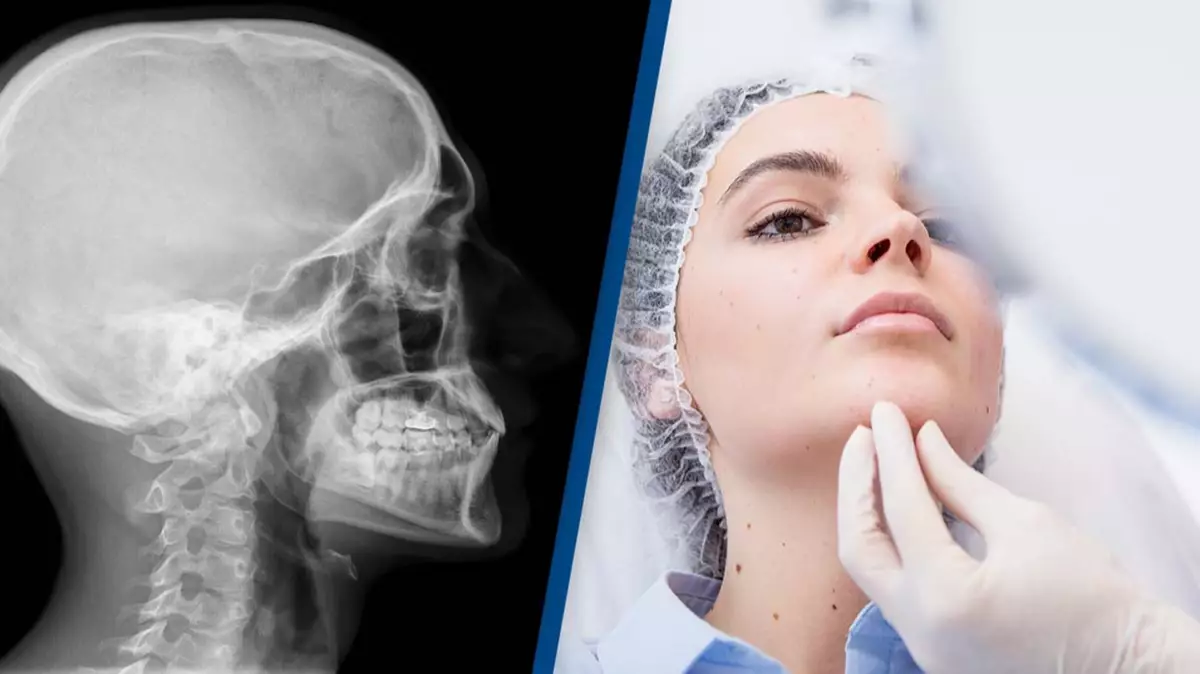
In biological terms, a chin is called the mental eminence.
It’s the forward-pointing part of your lower jaw.
Here’s what makes it special:
- It sticks out.
- It’s symmetrical.
- It appears only in modern humans.
Even Neanderthals didn’t have true chins.
That’s why A Biologist Explains Why Humans Have Chins starts with one simple truth: this feature is rare, specific, and evolutionarily strange.
Why Humans Are the Only Species With Chins
This is where things get interesting.
No animals. No apes. No exceptions.
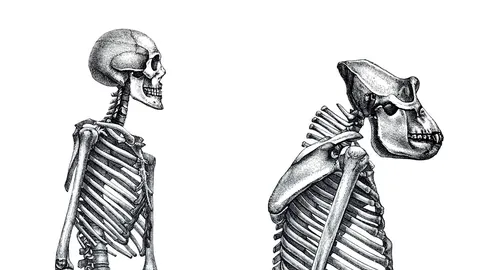
Chimpanzees don’t have chins.
Gorillas don’t have chins.
Dogs, cats, horses—none.
Even extinct human relatives lacked them.
That means:
- Chins appeared late in human evolution.
- They are not required for survival.
- They are not essential for eating or breathing.
So why did they stick around?
That’s the core mystery A Biologist Explains Why Humans Have Chins tries to solve.
Theory 1: Chins Evolved Due to Changes in the Face
One major theory focuses on facial structure.
Smaller faces changed everything
As humans evolved:
- Our faces became flatter.
- Our jaws became smaller.
- Our teeth reduced in size.
The chin may have emerged as a structural byproduct of these changes.
Think of it like this:
- The upper face moved backward.
- The lower jaw didn’t retreat as much.
- The chin stayed forward.
No intention. No purpose. Just geometry.
Many biologists believe this is the strongest explanation.
Theory 2: The Chin as Structural Support
Some scientists once believed the chin strengthened the jaw.
Does the chin make your jaw stronger?
It sounds logical.
But research doesn’t support it.
Studies show:
- Chins don’t significantly reduce stress during chewing.
- Animals without chins chew just fine.
- The jaw works without that extra projection.
So while the idea feels right, it doesn’t hold up.
That’s why A Biologist Explains Why Humans Have Chins often dismisses this theory as outdated.
Theory 3: Speech and Communication
This one comes up a lot.
Did chins help us talk?
Short answer: probably not.
Speech relies on:
- The tongue
- The larynx
- Breath control
The chin plays no direct role.
Neanderthals spoke without chins.
Modern humans with small chins speak perfectly.
So while speech shaped the face overall, the chin seems unrelated.
Theory 4: Sexual Selection and Attraction
Now we enter controversial territory.
Are chins about beauty?
Some researchers argue chins evolved because:
- They signal maturity.
- They suggest hormonal balance.
- They affect perceived attractiveness.
Strong chins in men often signal masculinity.
Softer chins in women signal femininity.
But here’s the problem:
- Preferences change across cultures.
- Beauty standards evolve.
- Chins vary widely and still function the same.
So sexual selection may have influenced chin variation, not origin.
The Most Accepted Explanation Among Biologists
After decades of debate, many experts agree on one idea.
Chins are evolutionary side effects
This means:
- Chins were not “selected for.”
- They appeared because of other changes.
- Evolution didn’t remove them because they weren’t harmful.
In biology, this is called a spandrel.
It’s like an architectural leftover that happens to look intentional.
That’s why A Biologist Explains Why Humans Have Chins often lands here.
Why Evolution Didn’t Remove the Chin
If chins are useless, why do we still have them?
Evolution doesn’t remove neutral traits
Evolution removes:
- Harmful traits
- Energy-wasting traits
It ignores:
- Neutral traits
- Cosmetic traits
The chin:
- Doesn’t cost energy
- Doesn’t reduce survival
- Doesn’t interfere with reproduction
So it stayed.
Read: Zach Justice Height: Shocking Truth Fans Love and Doubt
Do All Humans Have Chins?
Yes—but not in the same way.
Chin shapes vary a lot
You’ll see:
- Pointed chins
- Square chins
- Rounded chins
- Cleft chins
These differences come from:
- Genetics
- Hormones
- Developmental timing
But every modern human has some form of chin.
That alone supports the idea that A Biologist Explains Why Humans Have Chins as a shared evolutionary trait.
What Fossils Tell Us About Chins
Fossils help confirm the timeline.
Chins appeared late
Fossil records show:
- Early Homo species lacked chins.
- Neanderthals had sloping jaws.
- True chins appear with Homo sapiens.
This suggests:
- The chin emerged after modern humans did.
- It was not essential for survival.
Are Chins Still Evolving?
Yes, but slowly.
Modern factors influencing chin shape
Today, chin variation is influenced by:
- Diet
- Jaw use
- Orthodontics
- Genetics
Softer diets may reduce jaw size further.
That could change chin prominence in the future.
Common Myths About Human Chins
Let’s clear up a few.
Myth 1: Chins exist to protect the jaw
False. There’s no strong evidence.
Myth 2: Chins help with speech
False. Speech works without them.
Myth 3: Only attractive people have chins
False. Everyone has one.
That’s why A Biologist Explains Why Humans Have Chins focuses on science, not folklore.
Why This Tiny Feature Matters
You might wonder why this even matters.
Chins reveal how evolution works
They show that:
- Not everything has a purpose.
- Some traits are accidents.
- Humans are shaped by compromise, not design.
Your chin is a reminder that evolution isn’t perfect—it’s practical.
Personal Insight: The First Time This Clicked for Me
I remember learning this fact and feeling genuinely shocked.
Something so visible felt so meaningless.
But that realization made human evolution feel real.
Messy. Imperfect. Human.
That’s why topics like A Biologist Explains Why Humans Have Chins stick with people.
Conclusion
So, why do you have a chin?
Not because it helps you eat.
Not because it helps you talk.
Not because evolution planned it.
You have a chin because your face changed, your jaw shifted, and evolution didn’t bother fixing what wasn’t broken. A Biologist Explains Why Humans Have Chins not as a story of purpose, but as a story of coincidence.
Next time you see your reflection, ask yourself:
What other “useless” features make us human?
If this surprised you, share it. Someone else is probably wondering the same thing.
FAQs
1. Why are humans the only species with chins?
Because chins emerged late in human evolution due to facial restructuring.
2. Did Neanderthals have chins?
No. They had sloped lower jaws, not true chins.
3. Do chins serve any biological function?
No proven essential function has been identified.
4. Are chins linked to attractiveness?
They influence perception, but they didn’t evolve for beauty.
5. Can someone be born without a chin?
All modern humans have some form of chin structure.
6. Are cleft chins genetic?
Yes. They are inherited traits.
7. Will humans always have chins?
As long as they don’t become harmful, likely yes.
8. Does diet affect chin shape?
Indirectly, through jaw development.
9. Are chins still evolving?
Very slowly, but variation continues.
10. What does a chin say about evolution?
It shows evolution is often accidental, not intentional.
